There are people who travel great distances in their lives, making a home very far from the place in which they began. In this migration, memories also travel in the minds and hearts of individuals, sometimes finding an outlet in architecture. Such is the case of this interesting house on the edge of a bluff looking over the Obi Obi Valley in the Sunshine Coast hinterland. It was created for a woman who began her life in the borderlands south of Glasgow, in Scotland, before later moving to live in inner-city Brisbane.

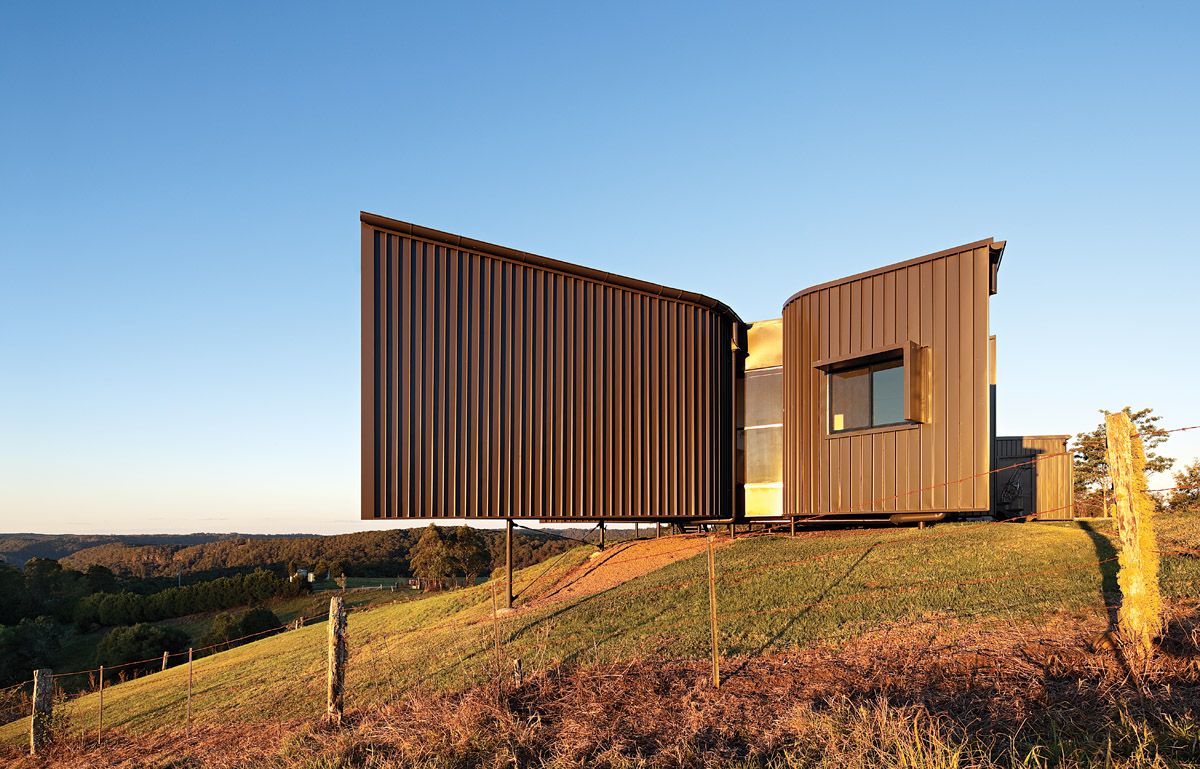
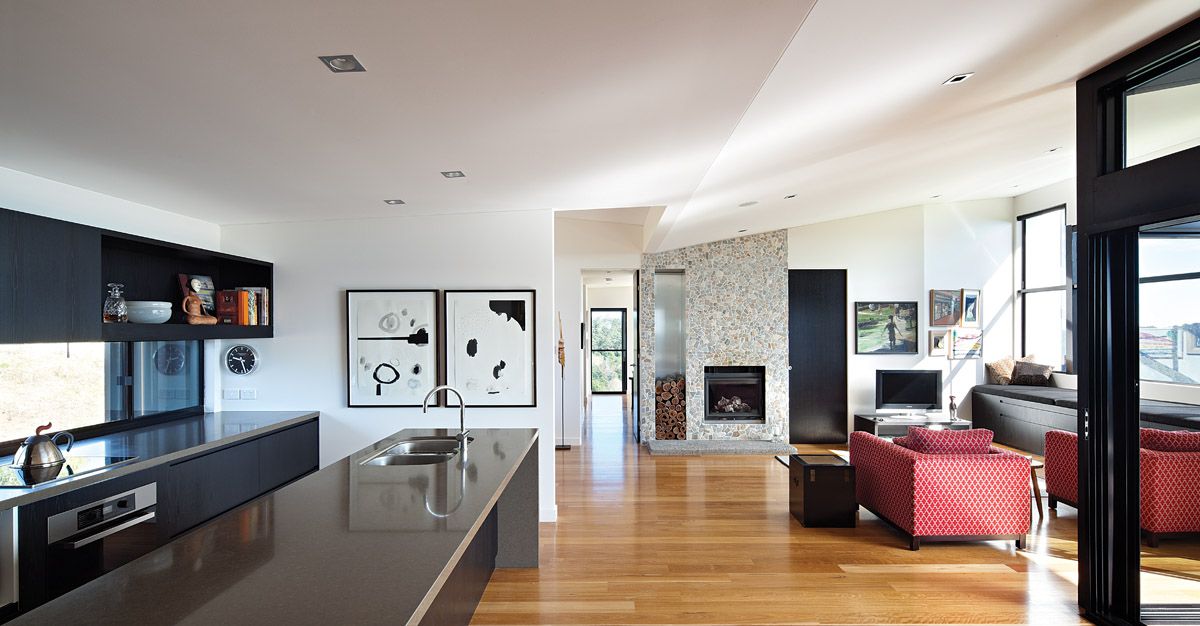
The living area provides a buffer between the owner’s wing and the visitors’ suite.
Image: Christopher Frederick Jones
Shane Thompson of BVN Architecture (in association with Daniel R. Fox Architect) was the architectural conduit of a dream long held by the client to live again in a rural setting. As her friend for many years, Shane was privy to this aspiration for “a house in the country,” a yearning, he suggests, driven by powerful memories of place from her earliest years. Although a city dweller for the majority of her life, more recently the client established a business in the small town of Maleny, which involved commuting regularly between the hinterland and Brisbane city. Her “tree change” fate was secured one day upon visiting a few acres of land for sale just north of Maleny. Her response to the place was immediate and visceral – a magic moment of connection that marked the beginning of a process of creating a new and unique dwelling.
The design of the house developed over several months, through several iterations, as an illustrated conversation between friends. Shane understood his client to be a genial host but also – importantly – a soul comfortable and happy in long periods of solitude. As Shane sketched, ideas took shape: a house for one, but occasionally also for more; a place for art; a place for action and entertainment; a place to think, write, read, rest and dream; a place of prospect and of retreat, capable of both commanding the view and enveloping the inhabitant. Poetic ideas about life in the house were met by sound principles of economy, sustainability and restraint, to ensure that the architecture developed as a suitable background for the client’s imagined inhabitation and as a place that Shane says “felt right, culturally” for her.
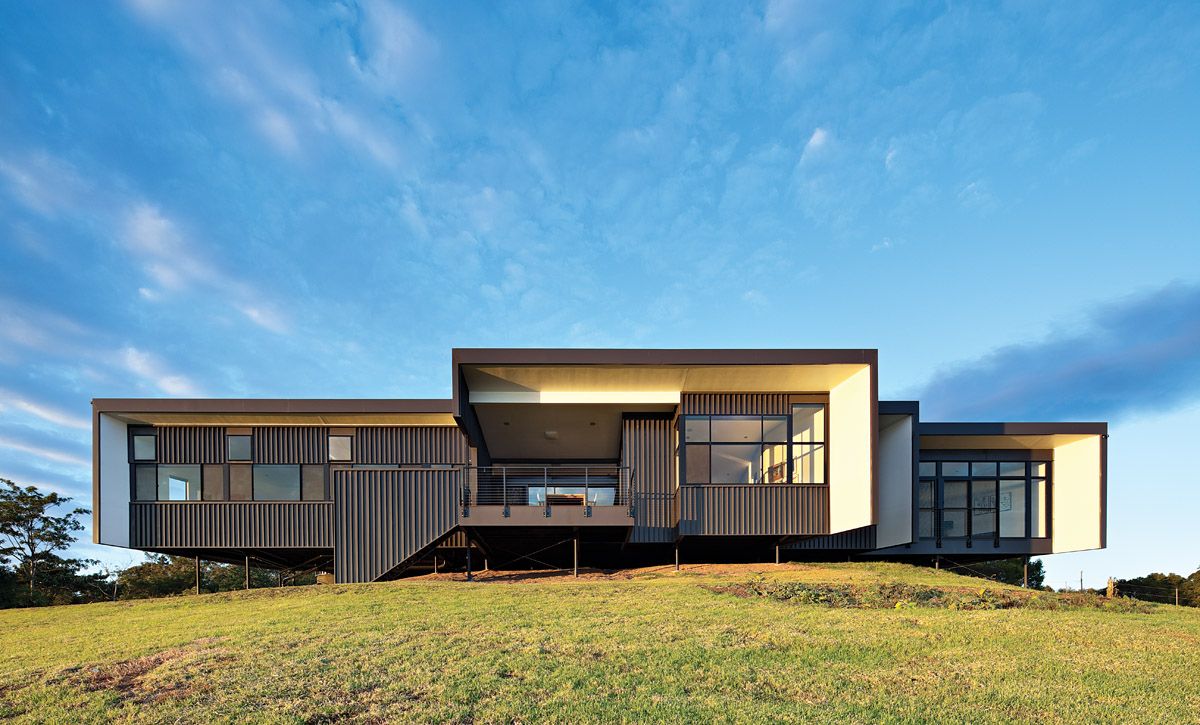
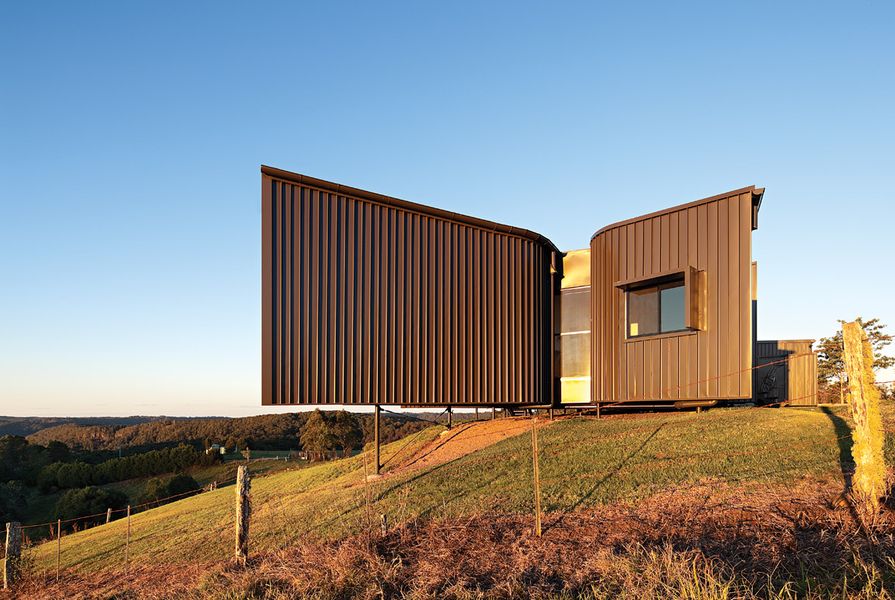
At the end of the short drive from Maleny, decorated by picturesque pastoral collections of grazing animals and the occasional agricultural relic, the house is approached in gentle descent through a dense thicket, creating a wonderful sense of procession and expectation. As the forest thins in transition, the house appears, its striking yet recessively dark profile like a new piece of horizon inserted into the complex scene of ranges and valley.

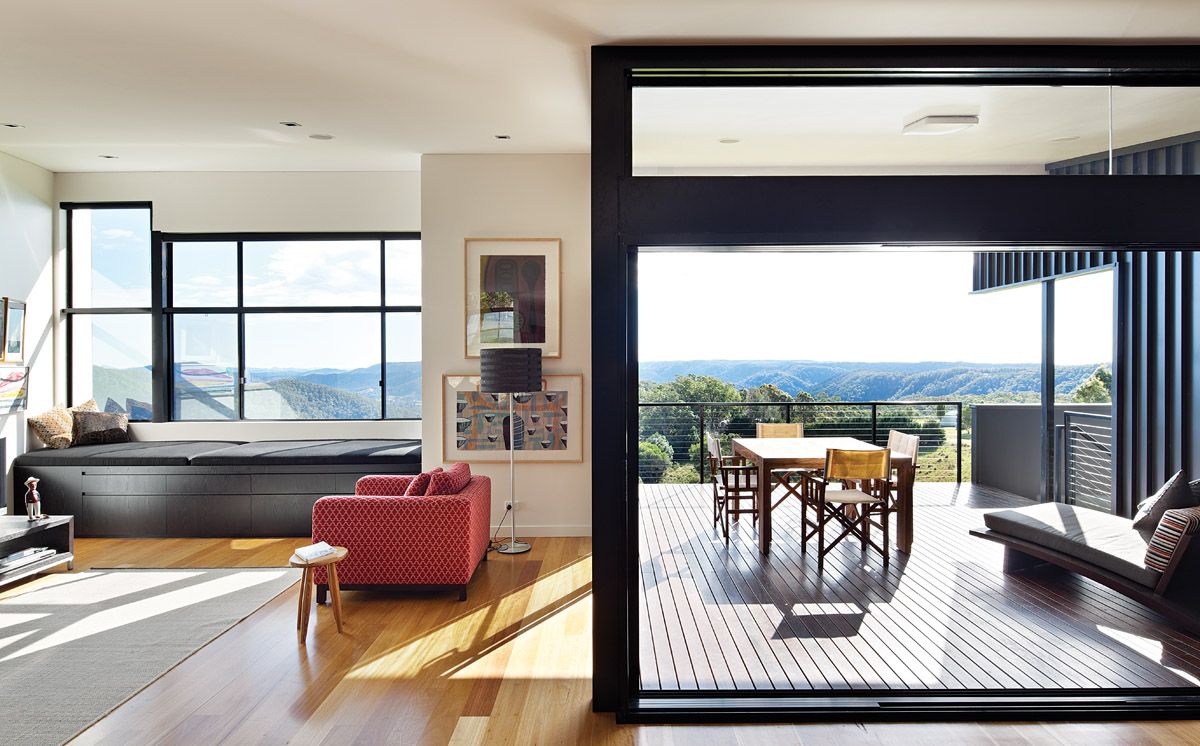
The living room and deck on the northern side of the house have spectacular views.
Image: Christopher Frederick Jones
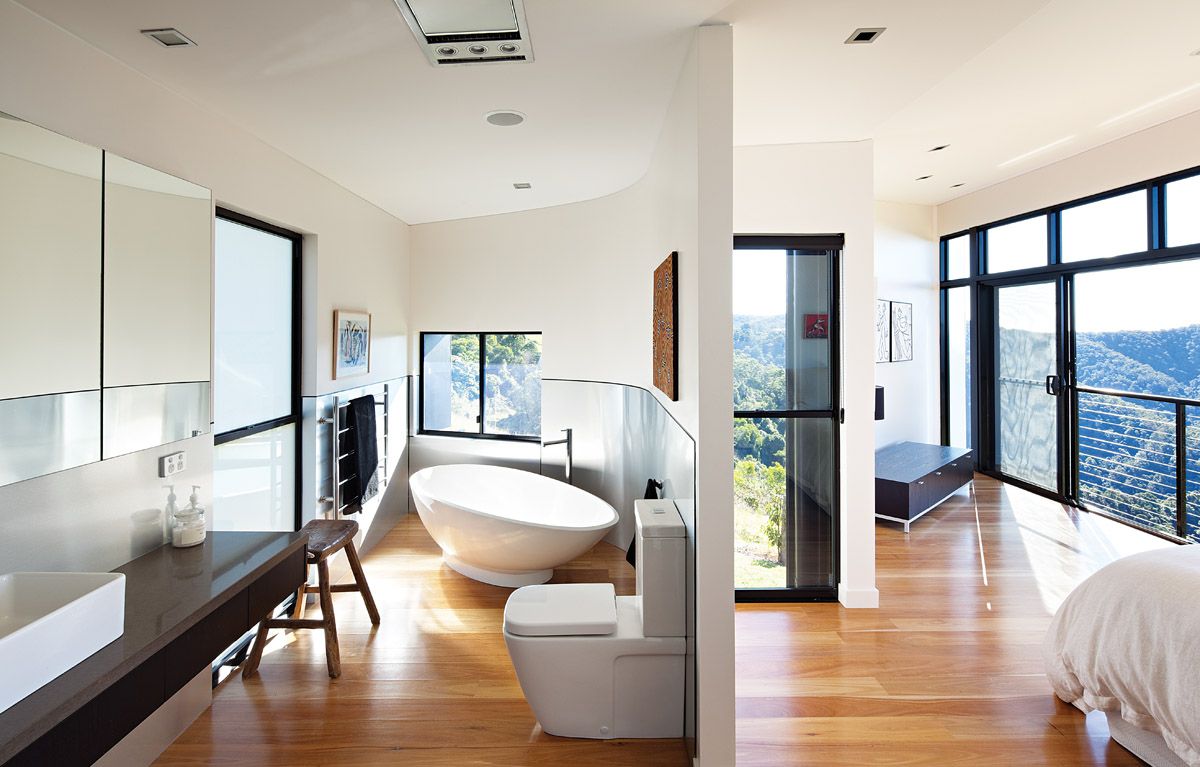
The house is broadly arranged along its east–west circulation axis in three parts. In the western third are the elegant private quarters of the owner for sleeping, dressing and bathing. In the eastern third, a suite for family and friends who come to stay, maybe for a week, or perhaps a month. These two territories meet in the middle third, the hub of living, dining, deck and kitchen. West of centre to the south is the framed entry portal, transparently addressing the view to the north in welcome. Within the modest dimensions of the central space, there are many different positions in which to while away the hours, happily alone or more socially with others. Most inviting of these is a deep and high window seat at the edge of the living room, its cosy in-between drama simultaneously of the house and of the view. Tucked away off the living space, secret behind a stony hearth, is a private study where literature and writing is quietly revered.
The house is decisively articulated to manage the experience of magnificent views, which could easily overwhelm the interior, while opening up to sun and sky, especially in the cool of winter. A very effective technique of splaying the white walls of the principal spaces out beyond the window line both deepens the threshold between inside and outside and controls the way the view “enters” the house and frames vision outwards.
The house is roofed and clad in Lysaght Longline, a contemporary, economical and resilient material, which, finished in a very dark “licorice,” conjures up a connection to the dark-stained timber vernacular from lands nearer to the client’s origins. The strong lines of the pans and ribs of the material’s profile give the controlled form of the house emphasis and a texture that can be perceived even at some distance. The effects of form, texture and colour are impressive in the landscape setting at any time, but in the dusky shift at the end of day they deepen, as solid form becomes shadow, and the warm interior world of the dwelling begins to glow. In each closing twilight and in all the days that dawn here the client rejoices in the perfection of a dream realized, her architects honoured to be part of the process.
Products and materials
- Roofing
- Lysaght Longline 305, Colorbond ‘Monument’; glasswool blanket.
- External walls
- Lysaght Longline 305, Colorbond ‘Monument’; glasswool blanket.
- Internal walls
- Plasterboard, painted; villaboard, painted; Alucobond, clear satin anodized.
- Windows
- G. James windows, powdercoated ‘Black’ with Solect low-e glazing.
- Doors
- James sliding doors, powdercoated ‘Black’; standard timber veneer doors, with Sikkens ‘Black’ stain.
- Flooring
- Blackbutt floorboards, finished with clear satin 2-pac.
- Kitchen
- Miele appliances; Nero veneer joinery; Quantum Quartz New Mink benchtop; Reece Scala curved sink mixer.
- Bathroom
- Caroma Cube Smartflush, Liano tapware, Cube 500 basins; Victoria and Albert Napoli Contemporary bath; Quantum Quartz New Mink benchtops.
- Other
- Dog sculpture by Cezary Stuglis; artworks by Tom Risley and Shane Thompson.
Credits
- Project
- Bryden House
- Architect
- BVN Architecture
Australia
- Project Team
- Shane Thompson, Danny Fox,
- Architect
- Daniel R. Fox Architect
Brisbane, Qld, Australia
- Consultants
-
Builder
Whitekey Constructions
Engineer Knight Consulting
Hydraulics Hamilton Design
Project team Richard Okonski
- Site Details
-
Location
Witta,
Qld,
Australia
Site type Rural
Building area 250 m2
- Project Details
-
Status
Built
Design, documentation 6 months
Construction 9 months
Website http://www.bvn.com.au/projects/bryden_house.html?OpenDocument&idx=Type&pcat=Residential&tpl=ext
Category Residential
Type New houses
Source
Project
Published online: 20 Oct 2011
Words:
Sheona Thomson
Images:
Christopher Frederick Jones
Issue
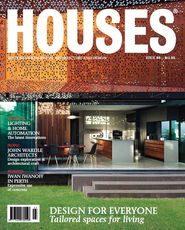
Houses, June 2011