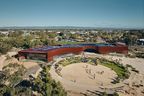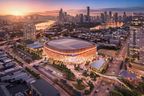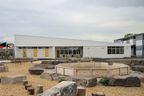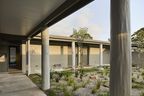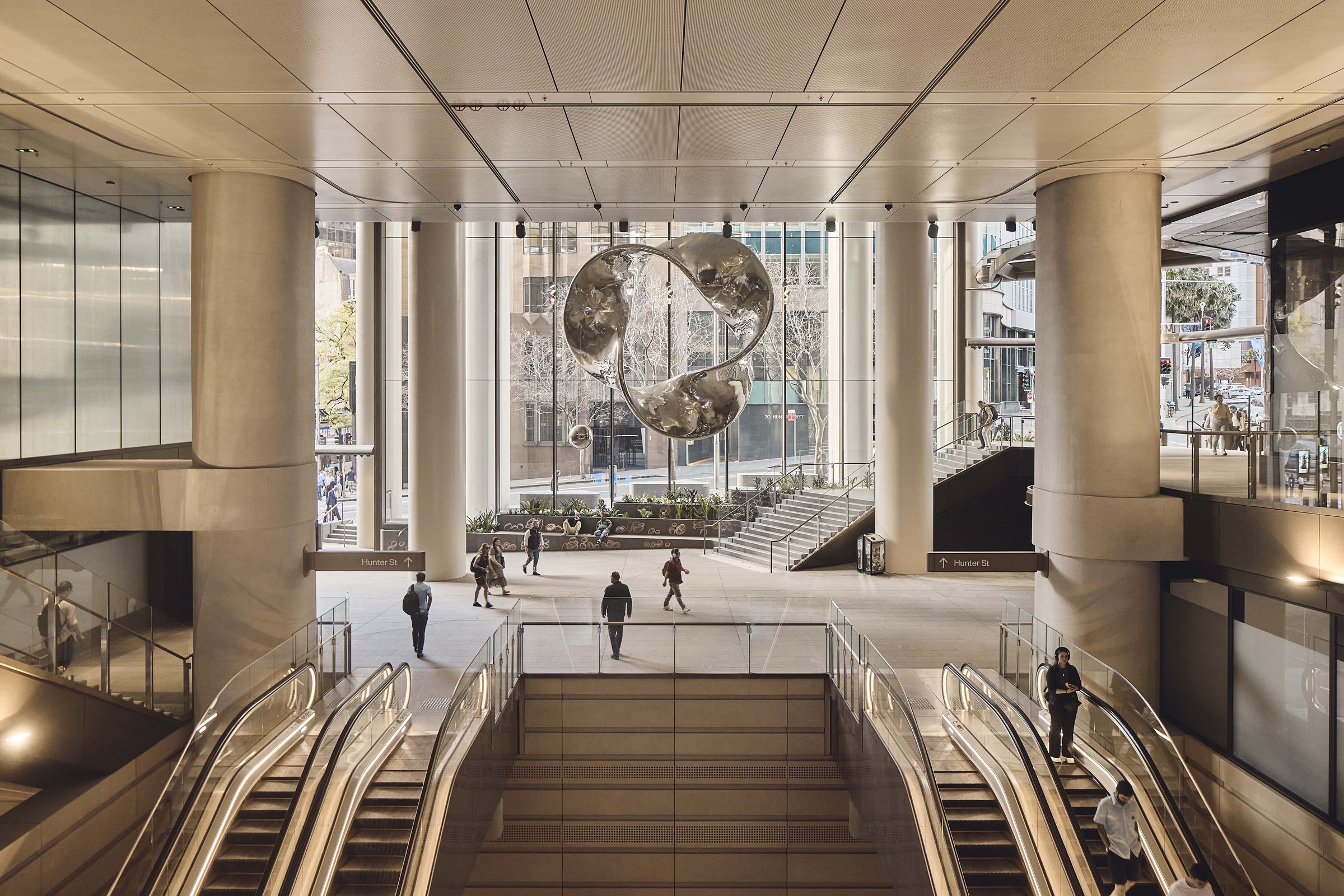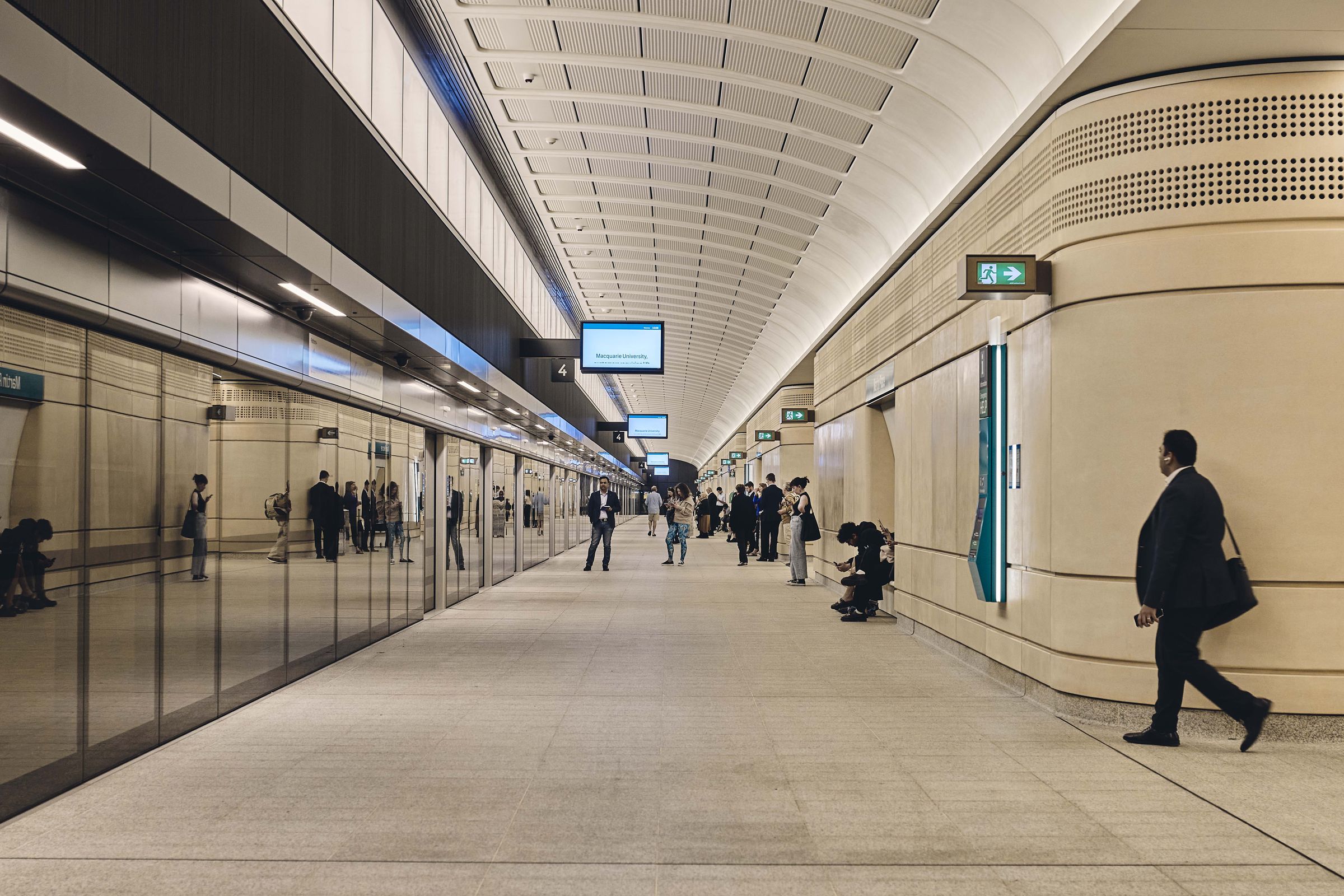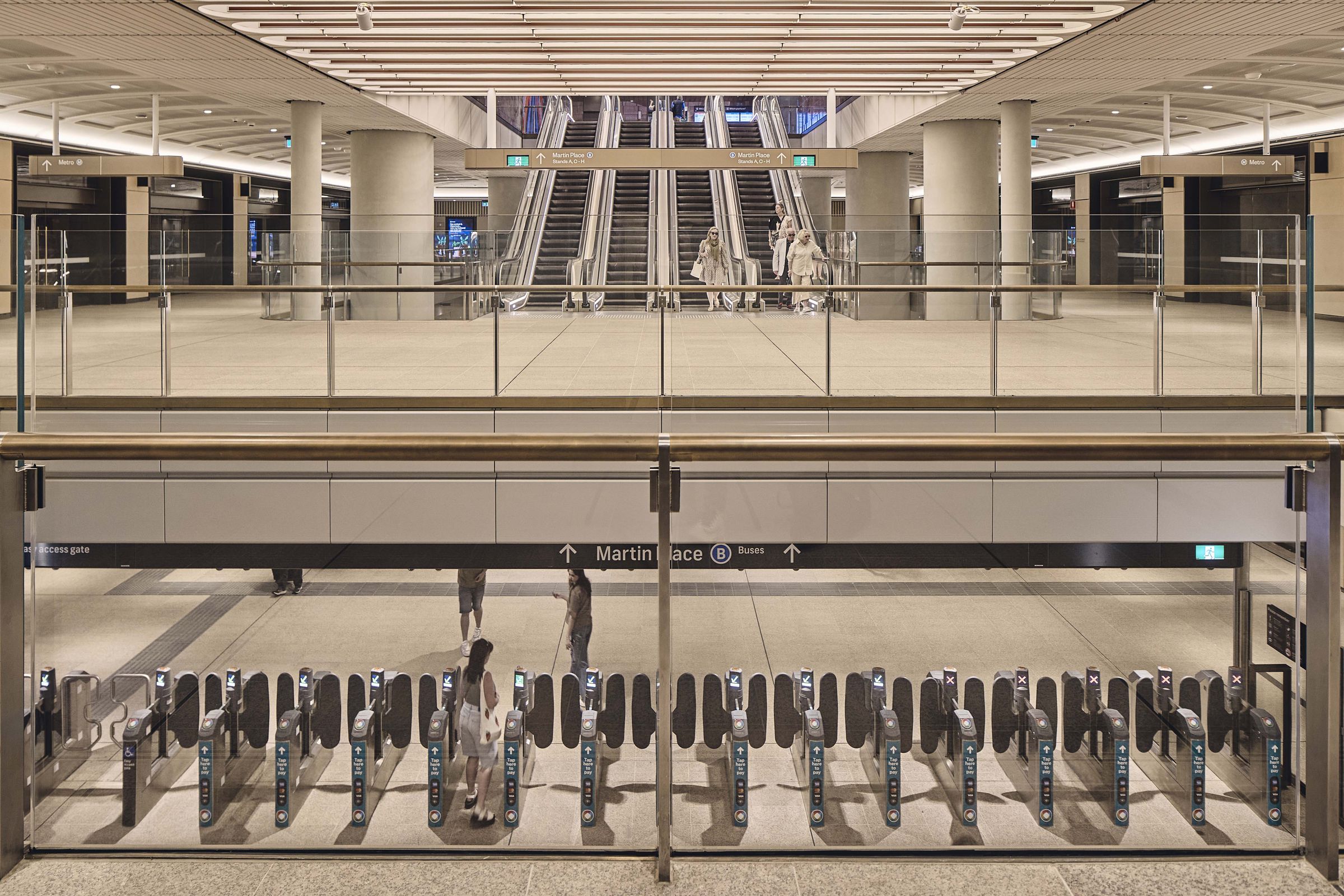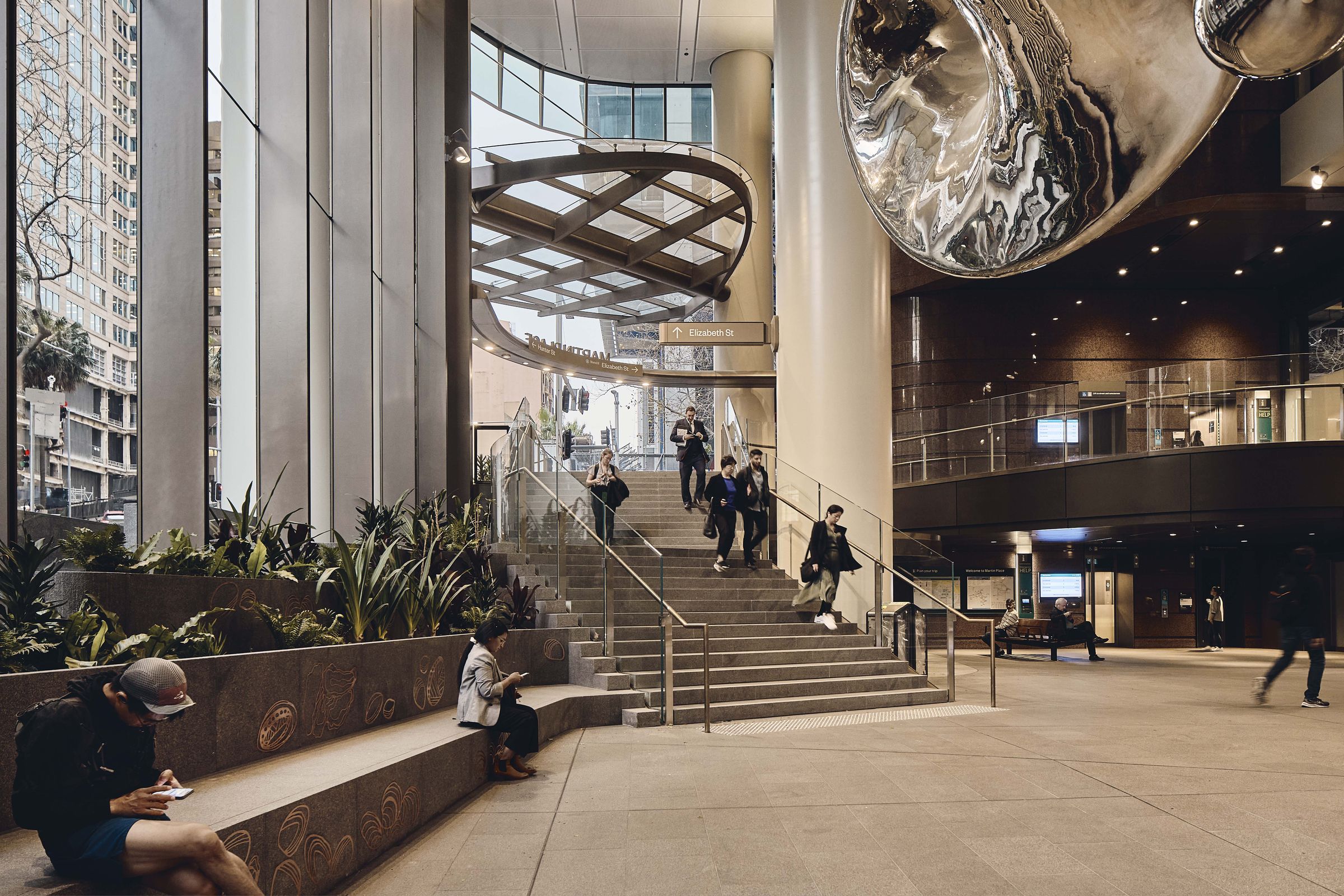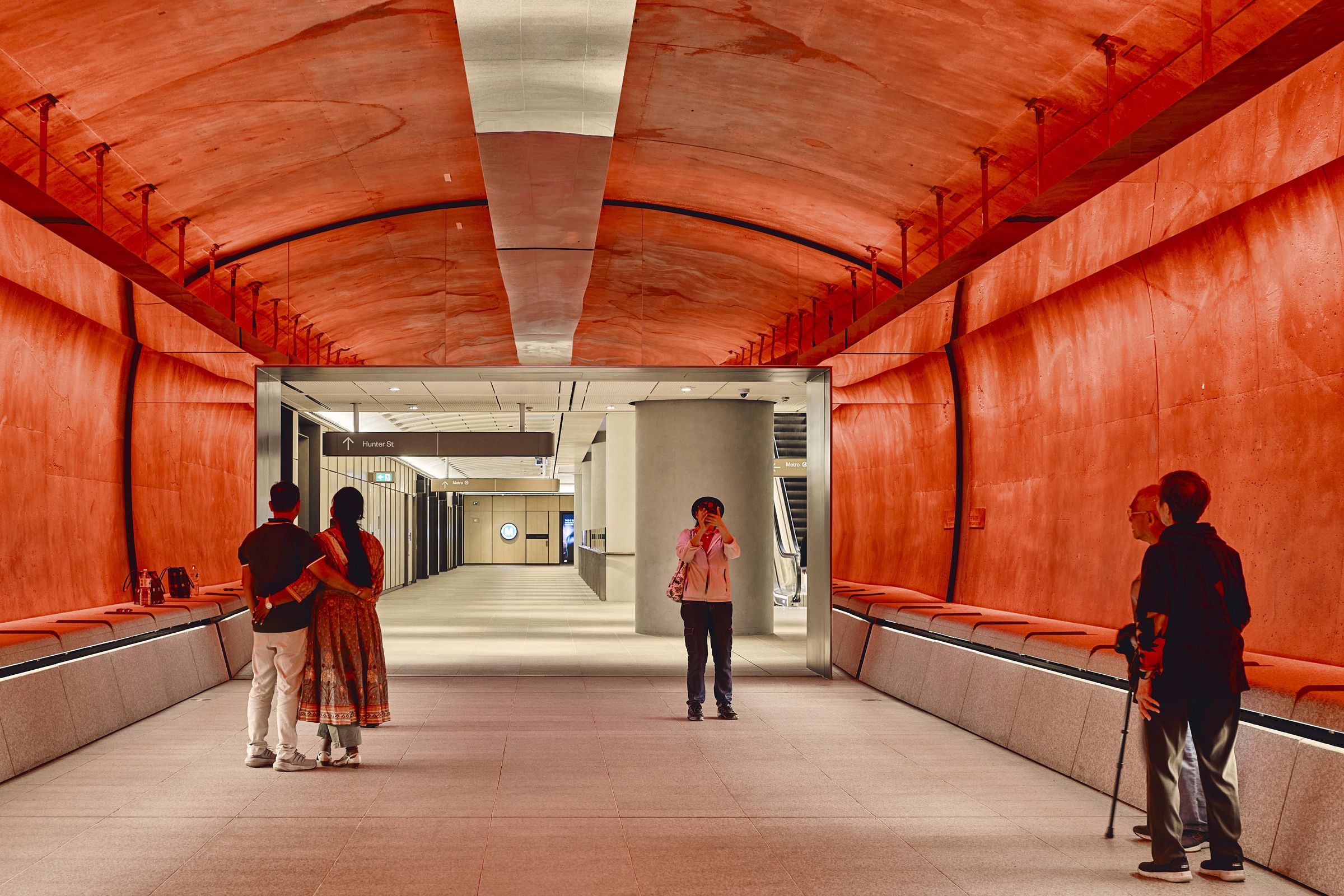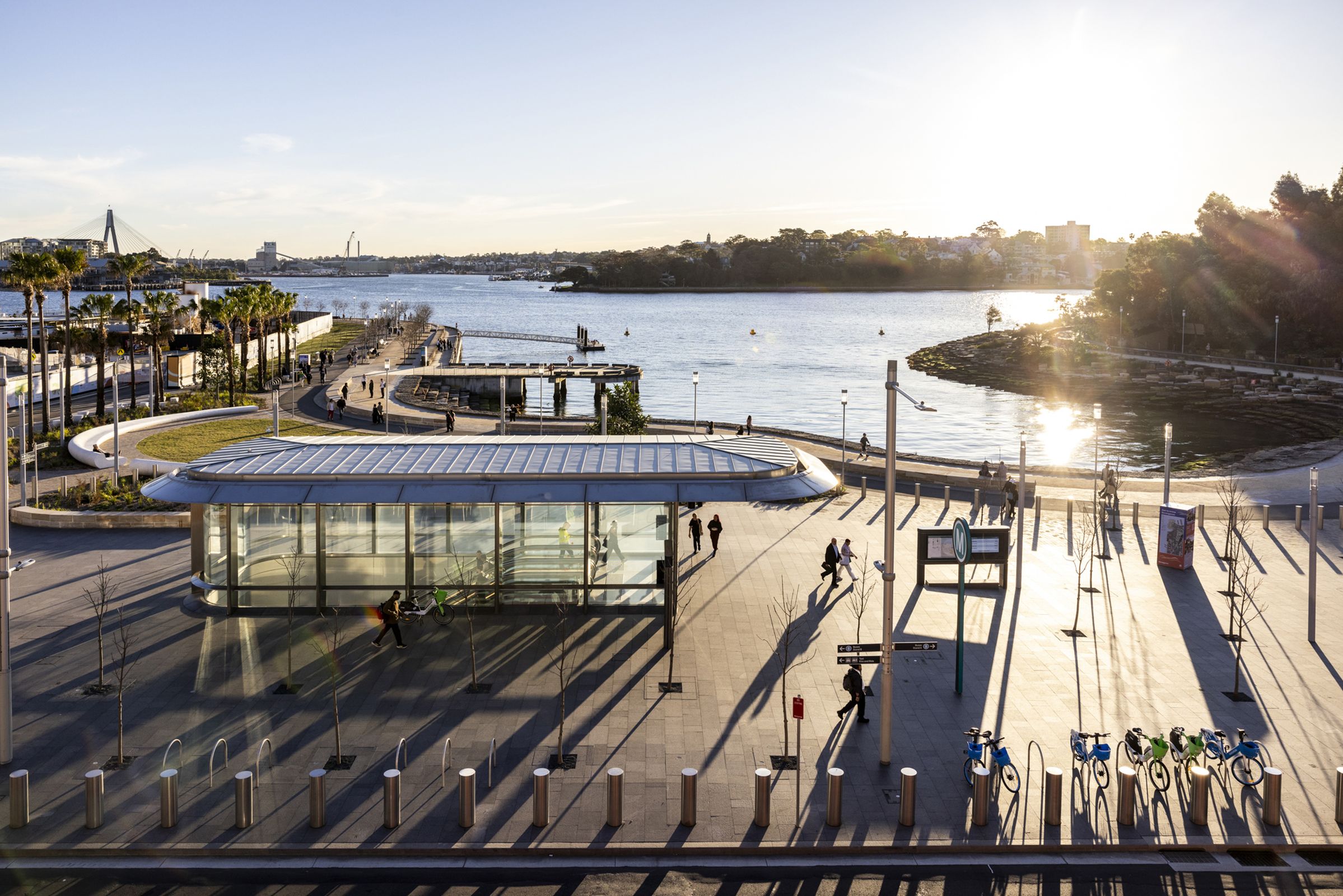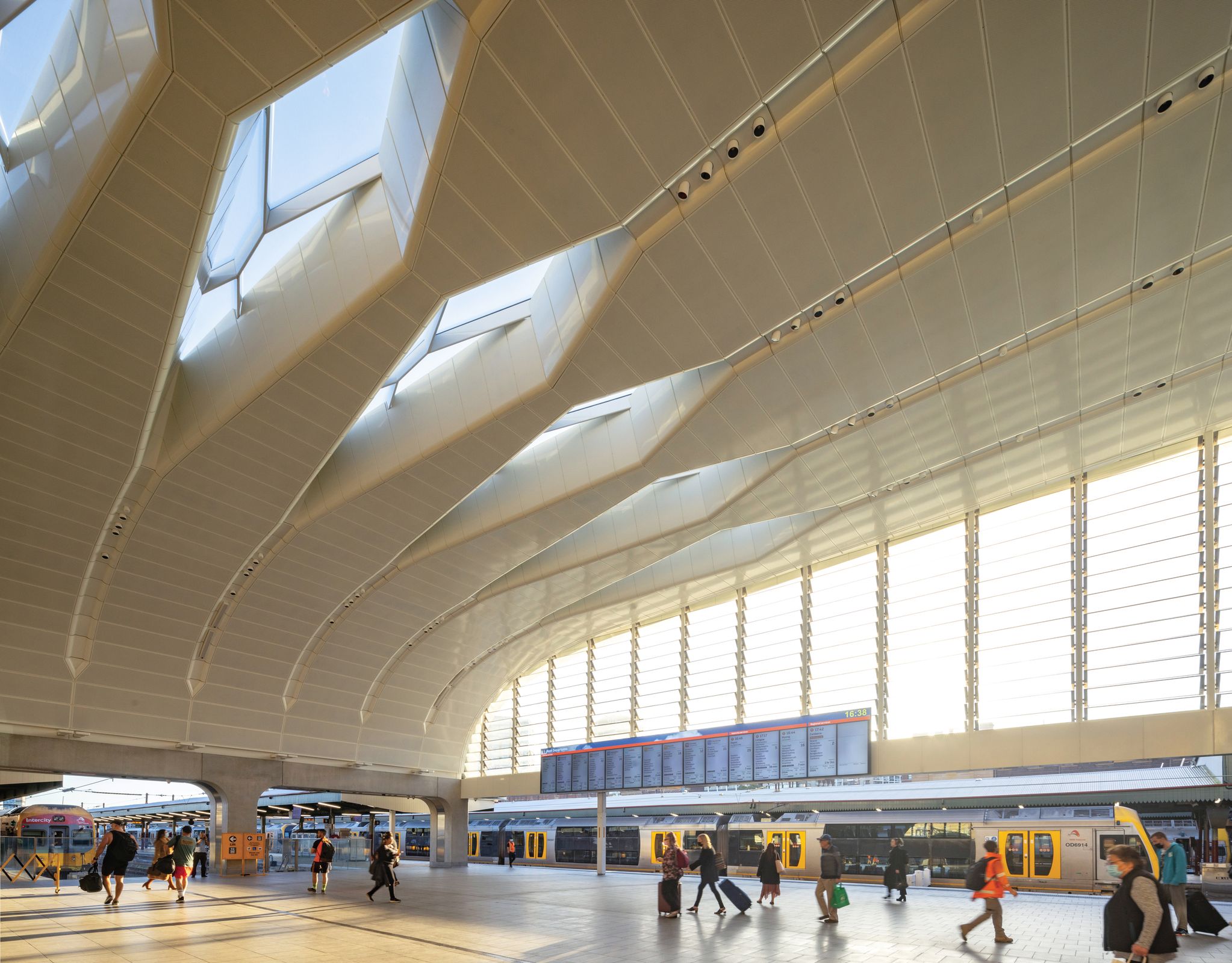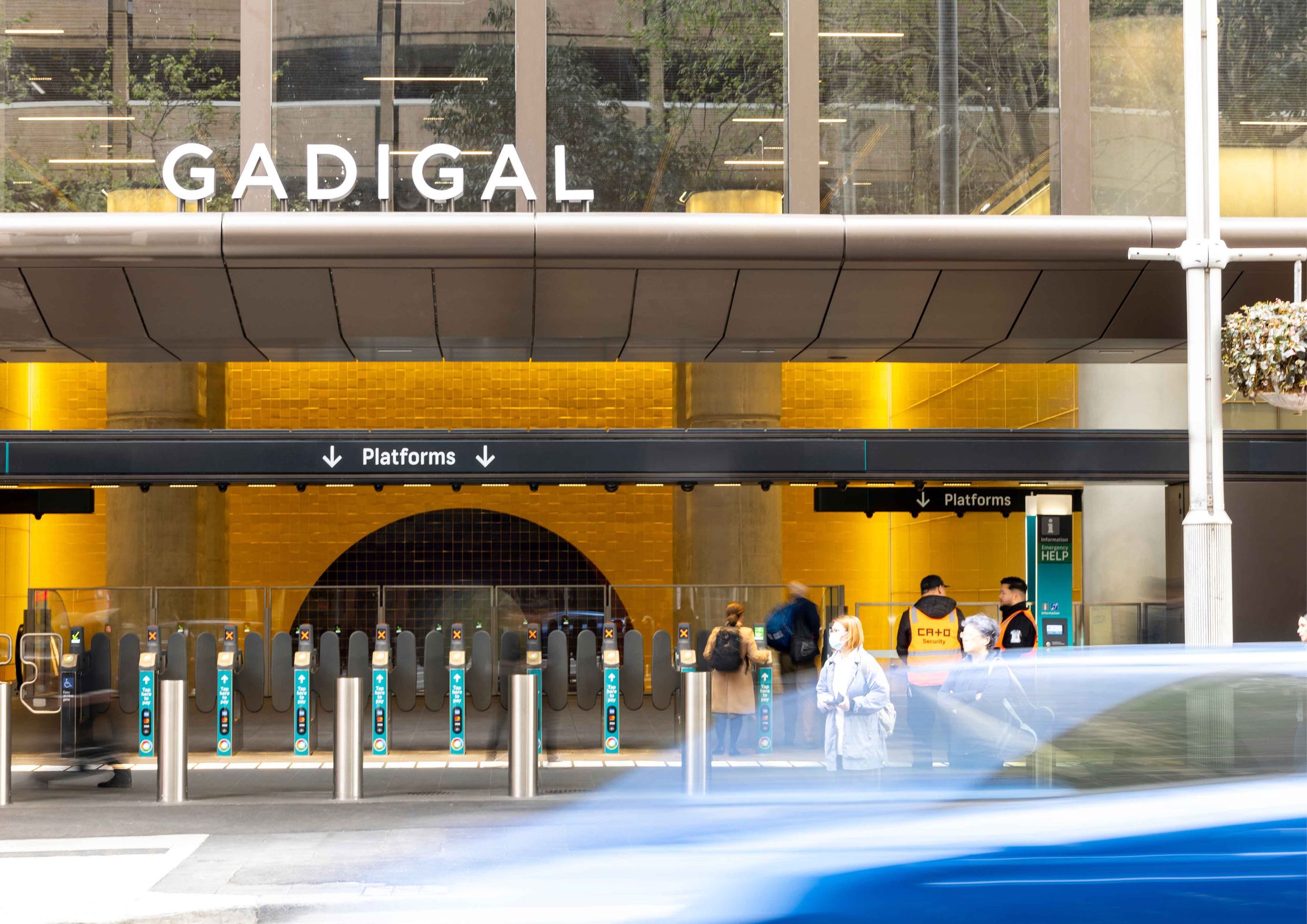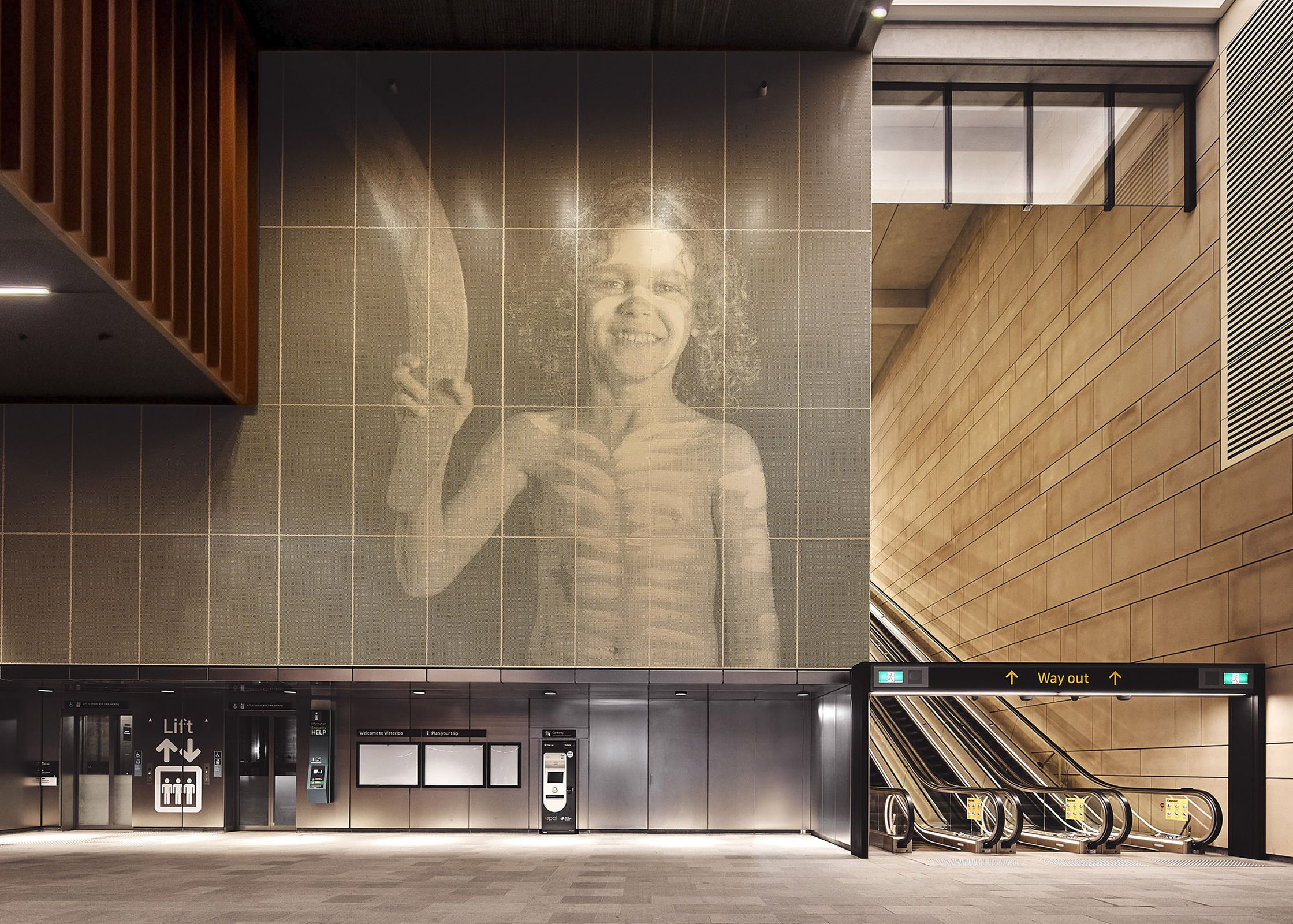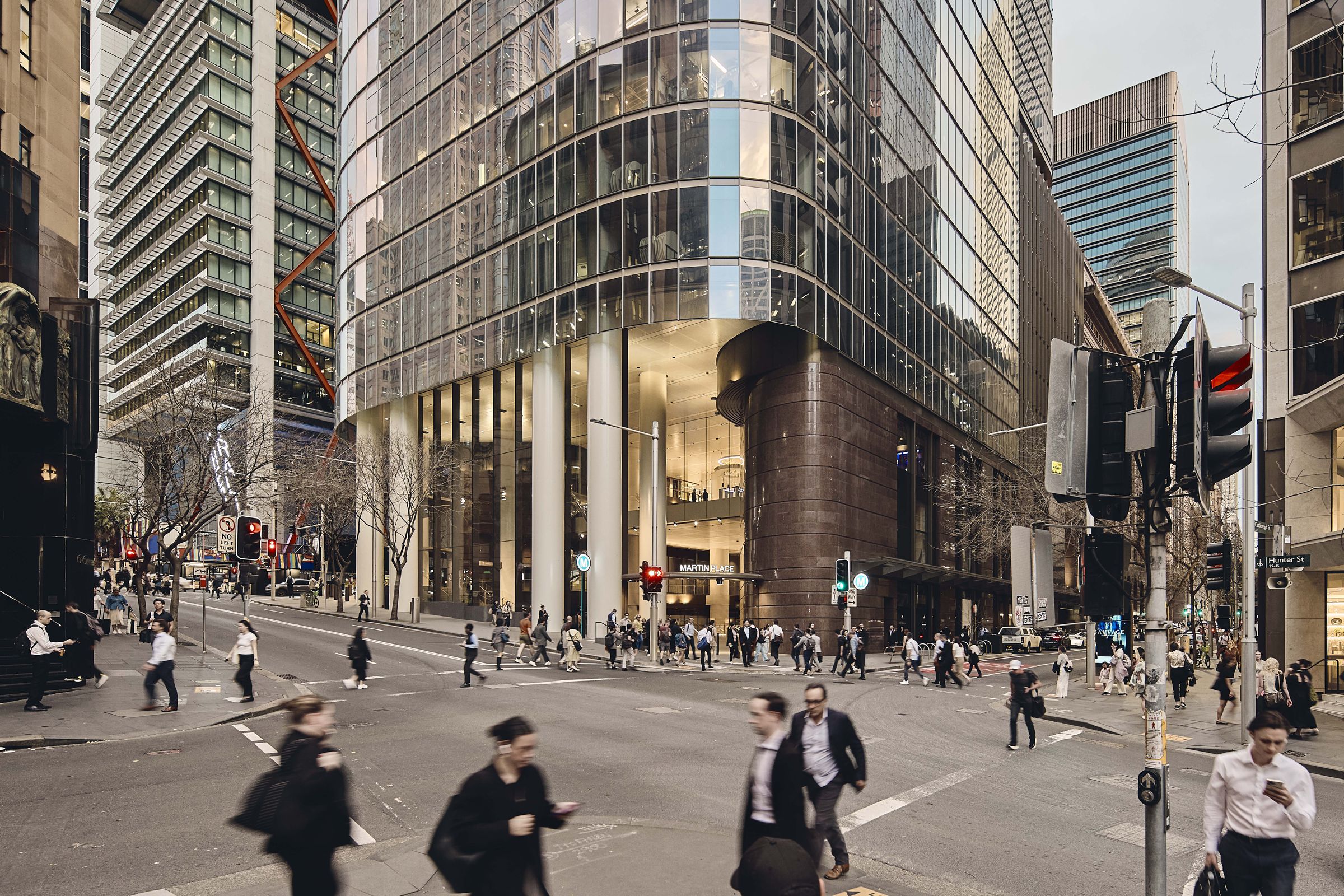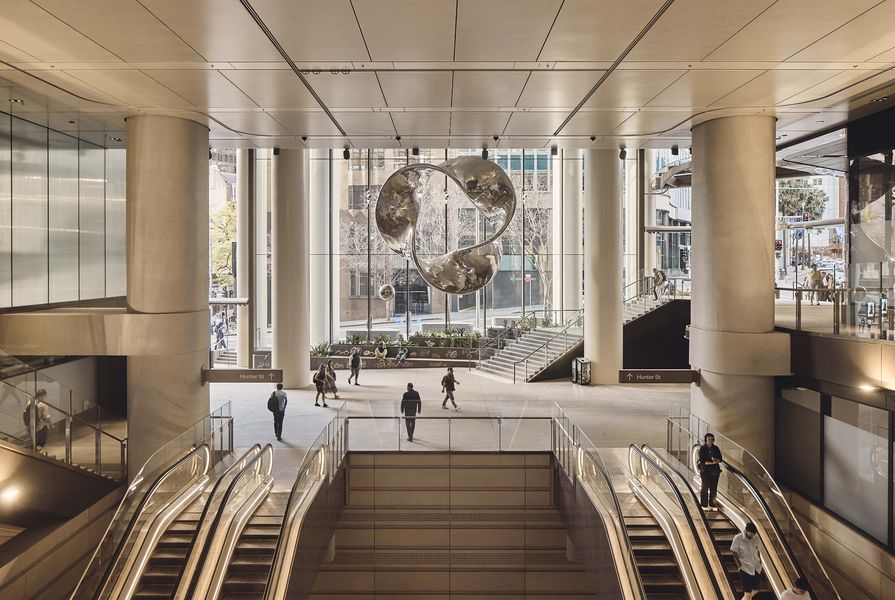

Sydney Metro’s city line extends the Metro North West Line (completed 2019) to run through the Sydney CBD via a series of new underground city stations. It currently runs from Chatswood in the city’s north, under Sydney Harbour and through the CBD, to Sydenham – and soon extending to Bankstown – in the south, using fully automated, high-frequency driverless trains. It provides a second rail harbour crossing to add capacity to the existing north–south transport corridor and relieve congestion on the Harbour Bridge’s North Shore line.
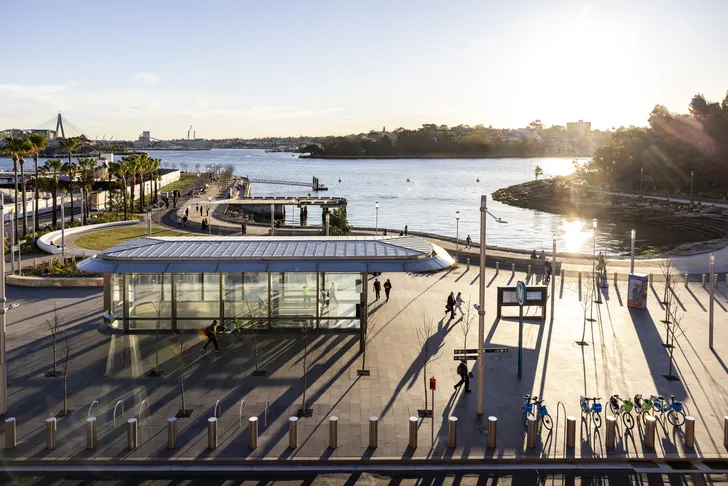
Six new underground city stations along 15.5 kilometres of tunnel were built for the project: Crows Nest, Victoria Cross, Barangaroo, Martin Place, Gadigal and Waterloo, along with a new metro platform at Central. Most incorporate significant over-station developments. Ten existing stations on the Bankstown section of the line are also being upgraded for driverless metro operation, expected to open in late 2026.
Unlike London’s Elizabeth Line, which mandated line-wide design consistency below ground, each new Sydney Metro station and over-station development was individually designed by a different architectural firm to be responsive to local context and to catalyse positive urban transformation. Each over-station development integrates the station entry such that independent “heroic” stations are absent. The developments are vibrant and highly place-specific, contributing to the public realm and creating a fully delivered urban renewal.
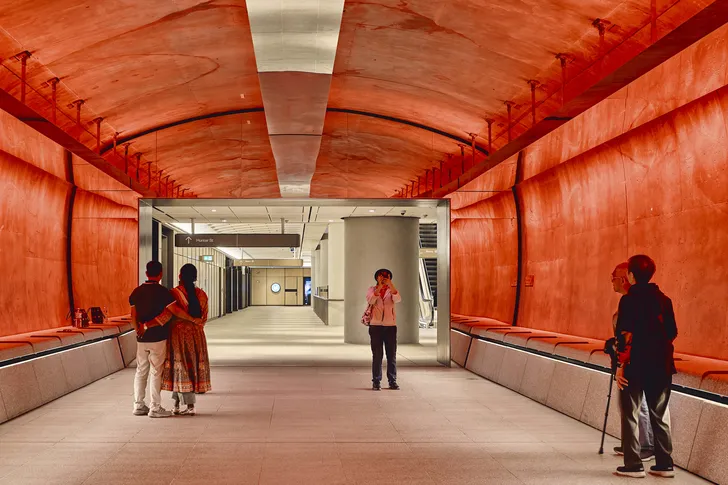
The City Line leaves a growing legacy of low-carbon city-making with activated transport precincts.
This case study is part of a spotlight on rail infrastructure by Philip Vivian. Read the other case studies on the Cross River Rail by Hassell and the Metronet Morley–Ellenbrook Line Project by Woods Bagot with TRCB Architects, TCL and UDLA.
Details
- Project
- Sydney Metro City Stations
- Barangaroo station design architect
- Foster and Partners
- Barangaroo station executive architect
- Architectus
- Barangaroo station services pods architect
- Atelier Luke
- Central station architect
- Woods Bagot, John McAslan and Partners, GHD
- Crows Nest station and OSD architect
- Woods Bagot
- Crows Nest station architect
- GHD
- Gadigal station OSD south architect
- Bates Smart
- Gadigal station and OSD north design architect
- Fosters and Partners
- Gadigal station and OSD north executive architect
- Cox Architecture
- Martin Place station OSD north architect
- JPW
- Martin Place station OSD south architect
- Tzannes
- Martin Place station architect
- Grimshaw Architects
- Reference design architect
- Cox Architecture, Hassell
- Stage 1 architect
- Fosters and Partners, Architectus
- Sydenham station architect
- Weston Williamson and Partners
- Sydenham station architect and landscape architect
- Hassell
- Victoria Cross station OSD architect
- Bates Smart
- Victoria Cross station design architect
- Cox Architecture
- Waterloo station architect
- John McAslan and Partners
- Aboriginal Nation
- Built on the land of the Cammeraygal and Gadigal people.
- Location
- Sydney, NSW, Australia
- Type
- Transport